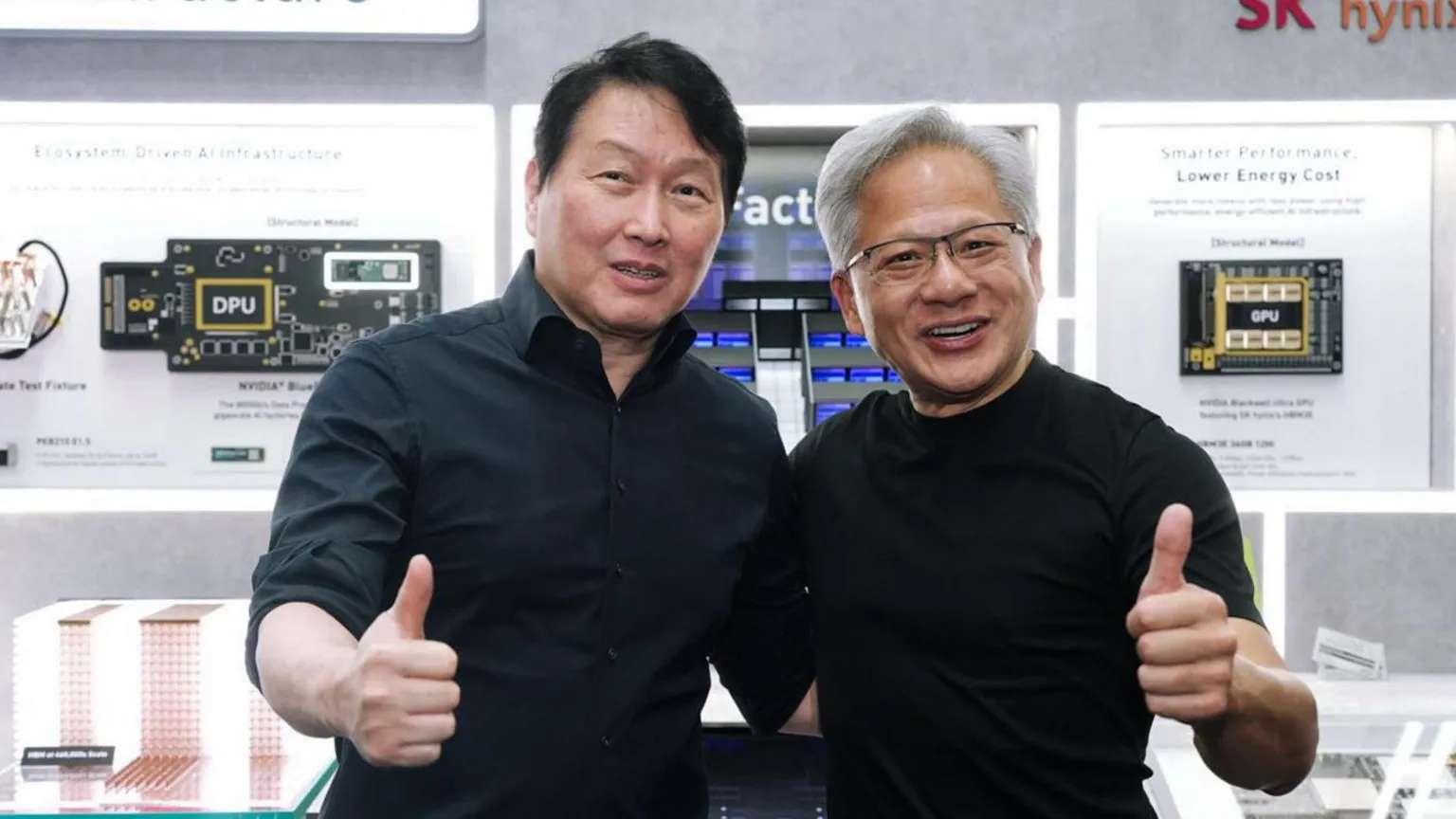
The SK Hynix US listing pulled in a record $26.5bn (£19.8bn) on Thursday, the largest sum a foreign company has ever raised through a share sale in the United States. The South Korean memory-chip maker priced 177.9 million American depositary shares at $149 each, with the stock due to start trading Friday on the Nasdaq. For a company that has become one of the most important suppliers to Nvidia, the deal is less about a quick cash grab and more about planting a flag in the market where the artificial-intelligence boom is being financed.
$149 a share, and seven times oversubscribed
Demand ran far ahead of supply. According to the BBC, orders reportedly topped the number of available shares by more than seven to one, a level of appetite that let bankers price at the top of the range. Each American depositary share represents a tenth of a common share traded in Seoul, so US buyers get a smaller, dollar-denominated slice without having to route trades through a Korean broker.
That structure matters. It widens the pool of investors who can own the stock and it sets a US reference price for a company whose home-market value already topped $1tn in May. SK Hynix shares have more than tripled in Seoul this year, helping push the benchmark Kospi index up by more than 70% over the same period.
An AI supply-chain bet, priced in dollars
SK Hynix is one of the world’s leading makers of memory chips, the high-bandwidth components that sit alongside Nvidia’s processors in AI data centres. The hundreds of billions of dollars flowing into AI infrastructure have rewritten the economics of that once-cyclical business: rivals Samsung Electronics and Micron have both seen their shares more than double in recent months.
The timing places SK Hynix inside a wider rush to raise money off the back of AI enthusiasm. In June, SpaceX became the world’s biggest-ever listing at $85.7bn, and AI developers Anthropic and OpenAI are both preparing floats at valuations north of $1tn. A memory supplier joining that queue signals how far the AI trade has spread beyond the marquee model-builders and into the companies that feed them hardware.
What the SK Hynix US listing signals for memory chips
Traders are watching the debut as a gauge of whether enthusiasm for memory makers has room to run. Seoul National University finance professor Jaewon Choi told the BBC the US venue gives SK Hynix easier access to the world’s deepest capital market, with fewer barriers than at home, and described the sale as a “yardstick to test the water” for investor appetite in the sector.
For readers tracking the AI build-out, the practical takeaway is that pricing power is shifting toward the memory tier. When a supplier can raise this much this fast, it can fund capacity ahead of demand rather than chasing it, which tends to keep it central to Nvidia’s roadmap. Watch first-day trading and any early guidance on how the proceeds are split between US-facing capacity and domestic plants.
Seoul’s $880bn plan is riding on the proceeds
The listing is also a national project. In June, South Korea’s government unveiled more than $880bn of planned investment in partnership with SK Hynix and Samsung, and officials are counting on cash raised in New York to help underwrite the domestic side of that build-out. Hanyang University business professor Yun Youngjin told the BBC the government is likely relying on the US funds to support SK Hynix’s investments at home.
There is a catch. The same Nasdaq listing that opens the taps could also pull investor money toward the US and away from Korea’s own market, Yun cautioned — a risk for a Kospi that has leaned heavily on chip stocks for its 70% surge. SK Hynix and Samsung now both carry valuations above $1tn, joining Nvidia, Apple, Microsoft and Alphabet in that club, which raises the stakes if capital starts to rotate offshore.
The corporate-strategy read
Strip away the record headline and the deal looks like a deliberate repositioning: a Korean champion financing an AI-era expansion in dollars, closer to its biggest customers and its most liquid investors. The upside is cheaper capital and a US shareholder base; the downside is exposure to American market swings and the political optics of moving fundraising abroad. For more coverage of how companies are navigating the AI capital cycle, see our Business desk. A useful corroborator on the sector’s earnings momentum is CNBC‘s report on Samsung’s record quarterly profit.
— Nadia Okonkwo, business desk, AXO News