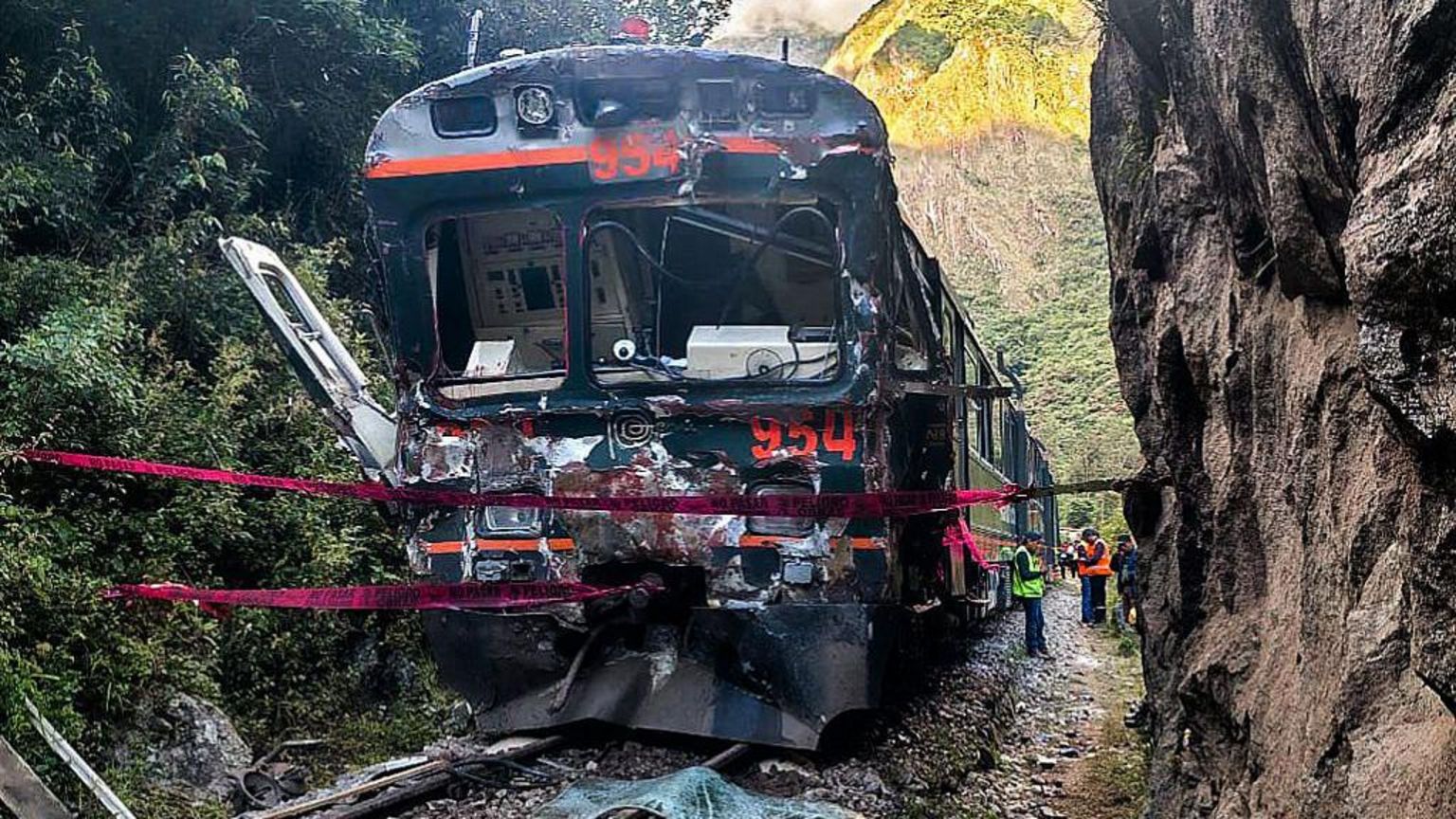
A Machu Picchu train crash on the single rail line to the Inca citadel killed a train driver and injured at least 40 people on December 30, halting the only conventional route to Peru’s most visited landmark.
Two trains — one operated by PeruRail, the other by Inca Rail — collided head-on between Ollantaytambo Station and Aguas Calientes, the gateway town to Machu Picchu. At least 20 of the injured were in serious condition. Hundreds of tourists remained stranded at the scene, awaiting evacuation through difficult mountain terrain.
The single-track bottleneck to Aguas Calientes
The 90-minute rail journey from Ollantaytambo to Aguas Calientes follows the Urubamba River through a narrow gorge. There is no road to Aguas Calientes. Trains and hiking trails are the only ways in. That geography makes the single track both essential and fragile.
When two trains meet on a single line, dispatching protocols are the only safeguard. PeruRail and Inca Rail share the route but run independent schedules. The cause of Tuesday’s collision has not been determined, but the structural risk is clear: a single track carrying two competing operators, each running multiple daily departures during peak tourist season.
Twenty ambulances reached the scene, and injured passengers were transferred to medical facilities in Cusco, roughly 50 miles away. The US embassy confirmed American citizens were hurt. The UK Foreign Office said it was supporting British nationals involved.
Two rival operators on one rail line
PeruRail and Inca Rail have operated on the Machu Picchu route for years, but the competitive landscape has grown tense. Local communities have protested what they call an insufficiently open bidding process for transport contracts, according to BBC News. The trains and buses serving the site carry steep ticket prices — sometimes exceeding $70 one-way — and the route’s limited accessibility makes those contracts highly lucrative.
The dispute matters for safety. When multiple operators share a single track without a unified dispatching authority, coordination depends on agreements rather than infrastructure. A collision between trains from two different companies raises immediate questions about whether scheduling conflicts are managed centrally or left to individual operators.
PeruRail said its staff “immediately” provided first aid to the driver, conductor, and passengers. Inca Rail has not yet issued a detailed public statement on the collision’s cause.
Overtourism pressures meet safety gaps
Machu Picchu sees over a million visitors annually. In 2011, Peru imposed a daily visitor cap to protect the 15th-century site, but overtourism concerns persist. The pressure extends to the transport corridor: more visitors mean more train departures on the same single track, during the same peak windows.
December is high season. The holiday rush packs trains to capacity, and operators add departures to meet demand. That density increases the margin for error on a route with no alternate path. If one train is delayed or misrouted, the ripple effects touch every downstream departure.
The crash also highlights what happens when evacuation infrastructure lags behind visitor volume. Hundreds of tourists waited at the scene because the terrain makes helicopter access difficult and the nearest medical center is in Cusco, a multi-hour transfer by road and rail.
What travelers heading to Machu Picchu should know
For travelers planning a Machu Picchu visit, the crash is a practical reminder that the route is a single point of failure. If the rail line is blocked — by a collision, a landslide, or a mechanical failure — there is no train alternative. The Inca Trail hike requires a registered tour operator and a permit booked months ahead. The Hydroelectric route, a cheaper road-and-rail combination, exists but adds hours and involves a long walk.
Travel insurance that covers evacuation and medical transfer is worth verifying before departure. The nearest major hospital to Machu Picchu is in Cusco, not Aguas Calientes. Travelers with limited mobility should note that the route involves train-to-bus-to-foot transfers even under normal conditions.
Peru’s government has not announced changes to rail operations following the crash. But the collision, coming amid an ongoing contract dispute, may accelerate calls for a unified dispatching system and stricter scheduling oversight on the shared track. For now, the two operators continue to run on the same line that just saw a fatal head-on collision.
Browse more destination reporting on our Travel page.
— Elena Petrov, climate desk, AXO News